
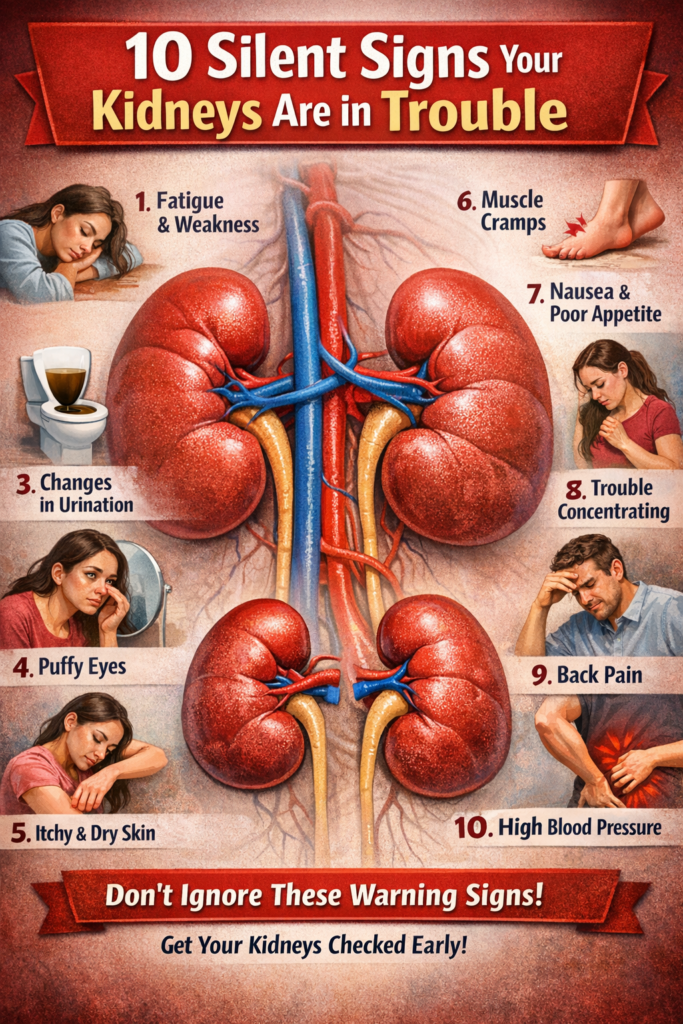
Your kidneys work quietly behind the scenes every minute of the day. These two bean-shaped organs filter waste from your blood, balance fluids and minerals, regulate blood pressure, and help produce hormones that keep your body functioning properly. Because they are so efficient, kidney problems can develop slowly and without obvious symptoms. In fact, many people don’t realize something is wrong until the condition has already progressed.
Conditions like Chronic Kidney Disease often develop gradually, which is why recognizing early warning signs can help you seek medical care sooner and protect your kidney health.
Below are 10 silent signs that your kidneys may be in trouble.
1. Constant Fatigue and Low Energy
When the kidneys are not filtering waste effectively, toxins can build up in the bloodstream. This buildup can make you feel tired, weak, or mentally drained. Kidney problems may also cause anemia because the kidneys produce a hormone that helps create red blood cells. Fewer red blood cells mean less oxygen reaching your tissues, leading to fatigue.
2. Swelling in the Feet, Ankles, or Hands
Healthy kidneys remove excess fluid from the body. When kidney function declines, fluid can accumulate in tissues, causing swelling. This swelling—also called edema—often appears in the legs, ankles, feet, or even the hands and face.
3. Changes in Urination
Because the kidneys produce urine, changes in urination are often one of the earliest signs of a problem. You might notice:
- Urinating more often, especially at night
- Darker or foamy urine
- Reduced urine output
- Difficulty urinating
Foamy urine can indicate excess protein in the urine, which is a common sign of kidney damage.
4. Persistent Puffiness Around the Eyes
Puffiness around the eyes, particularly in the morning, can be a sign that the kidneys are leaking protein into the urine. When protein levels in the blood drop, fluid may accumulate around the eyes, causing swelling.
5. Dry and Itchy Skin
Kidneys help maintain the balance of minerals and nutrients in the blood. When they stop functioning properly, toxins and imbalanced minerals can cause dry, irritated, and itchy skin. Persistent itching may be associated with advanced kidney disease.
6. Muscle Cramps
Kidney problems can lead to electrolyte imbalances, especially low calcium or abnormal phosphorus levels. These changes can trigger frequent muscle cramps, particularly in the legs.
7. Poor Appetite and Nausea
When waste products accumulate in the body, they can affect digestion and appetite. Many people with kidney issues experience nausea, vomiting, or a loss of appetite. Over time, this can also lead to unintended weight loss.
8. Trouble Concentrating
A buildup of toxins in the bloodstream can affect brain function. People with reduced kidney function sometimes report difficulty concentrating, memory problems, or feeling mentally foggy. This may also be linked to anemia caused by kidney disease.
9. Persistent Back Pain
Pain near the lower back or sides of the body can sometimes be related to kidney issues. For example, conditions like Kidney Stones or infections may cause discomfort in the kidney area.
10. High Blood Pressure
Kidneys play a key role in regulating blood pressure. When they are damaged, blood pressure can rise. At the same time, long-term high blood pressure can damage the kidneys further, creating a harmful cycle that may lead to Kidney Failure if not treated.
When to See a Doctor
Experiencing one of these symptoms does not necessarily mean you have kidney disease, but it is important to pay attention to changes in your body. If several symptoms appear or persist, consult a healthcare professional for proper evaluation. Blood and urine tests can often detect kidney problems early.
How to Protect Your Kidneys
Maintaining kidney health involves simple lifestyle habits:
- Drink enough water
- Eat a balanced diet rich in fruits and vegetables
- Limit salt and processed foods
- Manage blood pressure and blood sugar
- Exercise regularly
- Avoid excessive use of pain medications
Final Thoughts
Kidney problems are often called a “silent” condition because symptoms can appear slowly or go unnoticed for years. By recognizing these 10 silent warning signs, you can take action earlier and reduce the risk of developing serious conditions such as Chronic Kidney Disease.
Protecting your kidneys today can help ensure better overall health for years to come.



 Protected by Patchstack