
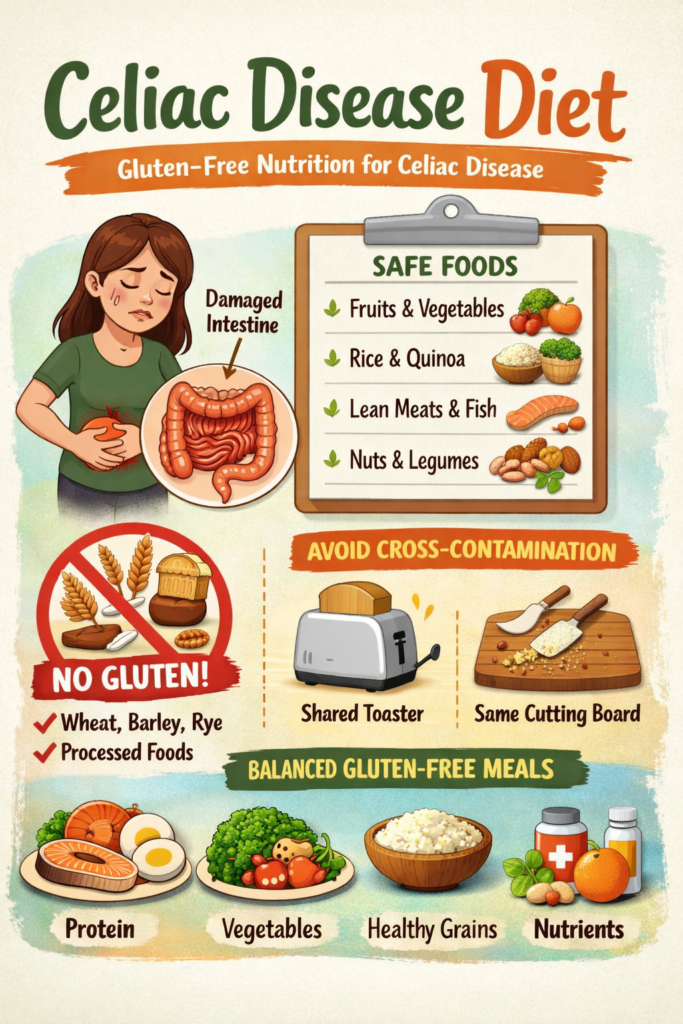
,Celiac disease occurs when the immune system reacts abnormally to gluten, a protein found in wheat, barley, and rye. This immune response damages the intestinal villi — tiny finger-like structures responsible for nutrient absorption.
Without treatment, celiac disease can lead to:
- Chronic digestive problems
- Anemia and nutrient deficiencies
- Fatigue and brain fog
- Bone loss (osteoporosis)
- Increased risk of other autoimmune diseases
🍽️ Why Diet Is the Core Treatment
Unlike other conditions, celiac disease cannot be managed with medication alone. The intestine heals only when all sources of gluten are eliminated.
A proper celiac diet:
✔ Prevents intestinal damage
✔ Reduces symptoms
✔ Restores nutrient absorption
✔ Improves long-term health and quality of life
✅ Foods Allowed on a Celiac Disease Diet
Naturally gluten-free foods are the foundation of safe eating:
🥦 Whole, Naturally Gluten-Free Foods
- Fresh fruits and vegetables
- Eggs
- Unprocessed meat, poultry, and fish
- Legumes (lentils, chickpeas, beans)
- Nuts and seeds
- Dairy (milk, yogurt, cheese)
🌾 Safe Gluten-Free Grains
- Rice
- Corn
- Quinoa
- Buckwheat (naturally gluten-free)
- Millet
- Sorghum
- Certified gluten-free oats
❌ Foods to Avoid Completely
Any food containing or contaminated with gluten must be avoided:
🚫 Gluten-Containing Grains
- Wheat (including spelt, durum, semolina)
- Barley
- Rye
- Triticale
🚫 Common Hidden Sources of Gluten
- Bread, pasta, pizza
- Cakes, pastries, cookies
- Soy sauce (unless gluten-free)
- Processed meats
- Soups and sauces thickened with flour
- Some medications and supplements
⚠️ Always check labels for “contains gluten” or “may contain traces of gluten.”
🧠 Cross-Contamination: A Hidden Danger
Even gluten-free foods can become unsafe through cross-contamination.
Avoid:
- Shared toasters
- Shared cutting boards
- Frying oil used for breaded foods
- Bulk bins
Best Practices:
- Use separate cooking tools
- Clean surfaces thoroughly
- Store gluten-free foods separately
🥗 Building a Balanced Gluten-Free Meal
A healthy celiac diet should include:
- Protein: fish, chicken, eggs, legumes
- Fiber: vegetables, fruits, gluten-free whole grains
- Healthy fats: olive oil, avocado, nuts
- Micronutrients: iron, calcium, vitamin D, B-vitamins
💡 Many people with celiac disease need to replenish nutrients after diagnosis due to prior malabsorption.
📅 Sample One-Day Celiac Meal Plan
Breakfast:
Gluten-free oatmeal with berries and chia seeds
Lunch:
Grilled chicken, quinoa, and mixed vegetable salad
Snack:
Greek yogurt with nuts
Dinner:
Baked salmon, roasted sweet potatoes, and steamed broccoli
🌟 Living Well with Celiac Disease
Adopting a gluten-free lifestyle can feel overwhelming at first, but with education and planning, it becomes second nature.
Helpful Tips:
- Read every label
- Choose whole foods over processed foods
- Eat at restaurants with gluten-free certification
- Work with a registered dietitian
- Join celiac support communities
🔚 Conclusion
The celiac disease diet is not a limitation — it is a powerful tool for healing and protecting the body. By strictly eliminating gluten and focusing on whole, naturally gluten-free foods, people with celiac disease can restore intestinal health, regain energy, and live full, vibrant lives.
A gluten-free diet isn’t just a choice for those with celiac disease — it’s a medical necessity.


 Protected by Patchstack